Sunday, 28 September 2014

Text installation


Lawrence Weiner, As Long As It Lasts, 2011, Rotterdam's Central Station


Rojo Futuro, System, 2012

ROBERT-BARRY

Robert Barry, A Great Concern Transmitted Telepathically, 1969-2009


Thursday, 25 September 2014

Sabato Visconti

[link]


With my idea of using imagery - specifically photography - to represent memory made me think about how I might represent memory in a similar way it is presented in our minds. I've already thought about materials, wanting to use something transparent, or at least semi transparent, to be printed on. 

NOTE - I settled on using fabric - I had a look at Spotlight for something thin and translucent and was a bit put off by the prices, but I also looked at second hand curtains, which were far cheaper and I think contribute more to the idea I'm trying to communicate. There's also a metaphor there somewhere - something to with the purpose of curtains, how they're used as a barrier in different situations, and obscure things.

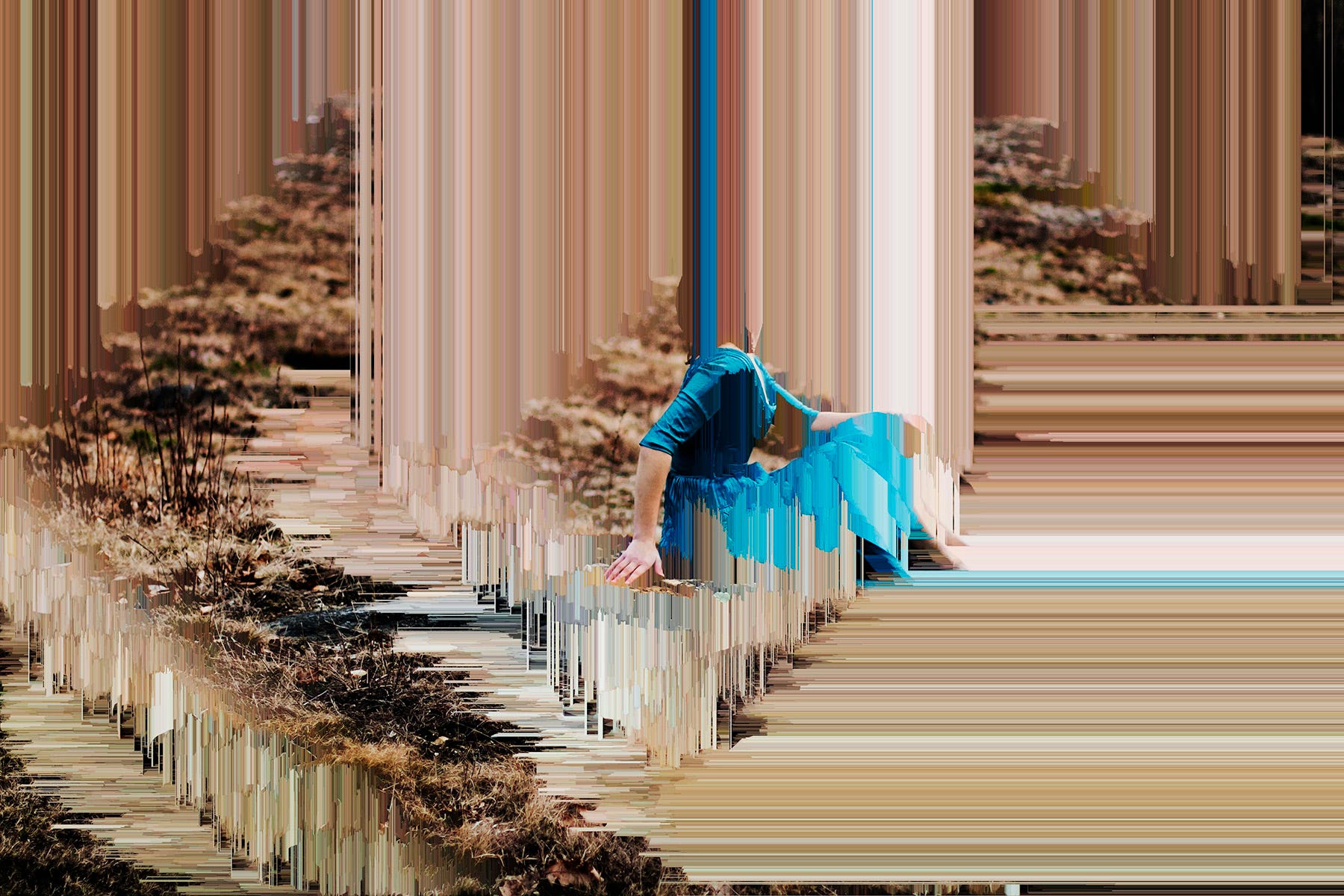
The distorted photographs by Sabato Visconti are visually interesting, but I also think this could be a method of partially obscuring an image while maintaining an idea of what it is. At this point I have most of the photos I want to use for the project already, but I could potentially research the method for future projects.


Wednesday, 24 September 2014

William Eggleston


Untitled (1970)

Another of those photos that remind me of things. In this case, the shed at a friends house in my childhood where we used to have sleepovers. We even used to watch movies, but not on a tv like that.

Sophie Harris Taylor


These were the kind of images that initially struck my interest in memory, association, and particularly sentimentality. There are a lot of photographers I've looked at that take photos like this, which all prompt memories of particular places I've been in my life, however significant.
The sentimentality is to do with the varying significance, and how a visual can evoke certain emotions pertaining to the memories associated with it.

Sunday, 14 September 2014

Elena Damiani


(Peru, 1979), Fading Field No.7, 2012

This is a way I could present the photos for my project - the frames wooden poles could be used to distribute weight, which wouldn't take a lot of time. This is a digital print on silk chiffon; using fabric is also an option I can consider.

Sam Durant

[link]

http://www.samdurant.net/files/gimgs/6_idontbelieve.jpghttp://www.samdurant.net/files/gimgs/6_bestfriend.jpg
http://www.samdurant.net/files/gimgs/6_ifread.jpg
http://www.samdurant.net/files/gimgs/6_dontseeme.jpghttp://www.samdurant.net/files/gimgs/6_crimeisblack.jpg
http://www.samdurant.net/files/gimgs/6_crimeisredblue.jpg
http://www.samdurant.net/files/gimgs/6_install1.jpg
http://www.samdurant.net/files/gimgs/6_install3.jpg

Mirror Travels in Neoliberalism, 2010

I found this installation work by Sam Durant while researching text artwork, which I've taken a recent interest in, but usually I'm more drawn to the meaning of the words themselves and not the way they are presented.

I like the way the words are superimposed in the reflections - I think That's something I could use in my work


Tuesday, 9 September 2014

Cristiano Mangione

[link]


Hierophania, 2009-10 (steel pen, self-made steel tools on wall)


I'm actually planning to go to my parents house in the summer to do some house renovating - namely rendering the outside walls of the house - partially to help them out, but also to become familiar with cement as a material in the way that it's supposed to be use before I decide to do interesting things with it.

This particular artwork works because of the space it's in - it fits with the warehouse-y thing that's going on - seems like the artist has used a stencil for the circular marking. It reminds me a bit of the residue left behind from a sticker - it looks natural enough to make me wonder what might have happened there - it's sort of supernatural in a way.

A Portrait


Untitled, Seren Coşkun

Okay, so this is a portrait and not anything that could be described as sculptural, but the lighting caught my eye and I thought - what about a sculpture, or a series of objects illuminated from behind in this way? I'm thinking the light source would be natural like in the photo, with curtains to create the right kind of atmosphere - then the objects/sculptures might contradict that domestic vibe; perhaps something abstract, or clinical, instead of homey.

Edwin Dean

[link]

likeafieldmouse:

Edwin Dean - Untitled (2008)

Untitled, 2008

I like the idea of using glass (or perhaps clear acrylic would be more durable) and photography or video. Initially I thought that would include printing or laser etching on the material – I hadn’t thought of projecting onto it. I could do both to superimpose images. I’m sure a lot of my interest in psychology could be worked into this idea. I’ve thought about exploring ideas of movement by superimposing images printed on glass, displayed in various ways, e.g. laid directly over each other, parallel to each other in rows, fanning out. Other considerations for presentation might be about whether they’ll be laying down, free-standing, in frames or on supports, hanging, or perhaps together on a hinge or strung together like a book to help them stand properly.

- the effect of the light both illuminating the image and shining through is really lovely

Richard Kraft


"Which Is To Say  is an immersive ten channel video installation at the Laguna Art Museum.

The installation seeks to involve the friction and fluidity between familiar polarities – human and animal, sacred and secular, culture and nature, gravity and lightness. Shot at locations throughout the United States and in India, the work brushes apparently disparate things against each other, creating numerous relationships and juxtapositions and this multiple interpretations and readings.

Each projection is between one and a half and two hours (running on a continuous loop) and consists of sequenced, static durational shots ranging in length form approximately three to sixty minutes. These long shots are sometimes interjected with very quick cuts to another scene. Using variations in pace and rhythm, the installation aims to create a contemplative space in which the viewer’s experience of time both collapses and extends. The projections are sequenced and spaced so as to encourage unexpected connections (for example, birds from one appearing to fly in another). For the most part the work is silent, however (very bref) sound is used periodically to interrupt the space and to add another layer of potential meaning to the piece.


At the same time as each projection is part of the larger installation, each is conceived as autonomous piece that might also be thought of as a painting, in part because of the durational quality, lushness and colour, but also because in the relationships with specific artists and genres, The views of rooftops in Pushkar, India for example, functions very much like na Indian miniature painting; the smoke from a wildfire in Los Angeles relates to abstract painting, and some of the water pieces refer to Monet, Rothko and Richter."


Interesting focus on various interpretations. I’m interested in the uniqueness of the individual mind and how ones associations and experiences can vastly alter the perception of something.

- Another example of various ways to project images. 


Doug Aitken

[link]


Altered Earth,  2012

I was drawn to Doug Aitken's installations by the way in which they are presented - on adjacent walls, sometimes parallel, other times symmetrical/reflected. Got m thinking about different ways film and images can be projected or displayed.

Things to think about: place, scale, multiples?, surface, height, space (where people will have to stand to see the projection clearly


S-l-o-w-ness—it gave meaning to everything. It made everything royal.
— John Steinbeck

Antony Gormley

[link]

How can you make the spaces that people displace into a collective energy field – in oter words take the idea of spatial extension from the idea of singularity, producing an expanded field to an immersive field of individual packets of energy?

Occupying an entire floor of BALTIC (8000 square feet), the piece involved the participation of volunteers from Newcastle and Gateshead.

Volunteers aged from two to eight-five years were moulded in plaster by teams of specially trained staff. These moulds were then used to construct the individual DOMAIN sculptures by a process of welding the steel elements together inside each mould.


A DOMAIN is constructed of stainless steel bars of various lengths, with the finished installation including a collection of 287 sculptures. The work needs to be inhabited by the living bodies of the viewers (which in Gateshead included many of the friends and relatives of the participants). It is their motion through the piece that made the work.

DOMAIN FIELD

DOMAIN FIELD

DOMAIN FIELD

DOMAIN FIELD

WORK IN PROGRESS

I thought this particular work required it's own post. The text at the top is the statement accompanying the photos on his website.

I thought the concept behind the work is rather interesting - the space a body occupies. It's communicated well in the sort of transparentness of the figures and their almost not-quite-corporeal quality.
The motion of people walking among the figures definitely made the work - as written in statement - the way they have to move around 'previously occupied space'

Monday, 8 September 2014

Antony Gormley

[link]

FERMENT II

Ferment II, 2013

MEET

Meet, 2014

RESORT

Resort, 2011

SPINE

Spine,  2006

ANOTHER SINGULARITY (CHINA)

Another Singularity (China), 2009

Seeing Antony Gormley's work in class was something of a revision as I've researched his work before but with more of a focus on his more solid figures (e.g. Concentrate I). I did notice the similarities in his works using finer shaped metals to my first project (images pending) for the semester, both in material and the relation to the body. The forms in these particular works are quite beautiful, particularly I think when an accumulated mass.